
Resources for and musings of the Filipino Law Student.
Sunday, October 19, 2008


Saturday, October 18, 2008
Rationalizing Sin Taxes
Sin taxes (or excise taxes on tobacco and alcohol products) are once again in the limelight, as the government is looking for ways to increase its revenues.

Malaya reports that Senator Francis Escudero said that "additional taxes on cigarettes and liquor products is not the correct approach to weather the financial fallout in the United States."
On the other hand, Manila Standard Today reports that Health Secretary Francisco Duque hopes that the increase in cigarette taxes would make cigarettes so expensive that the poor can’t afford to buy them.
I'll take the middle road.
Secretary Duque's wish will most likely fizzle, given the fact that the government is bent on increasing public coffers, not protecting public health. In the House deliberations (dated October 27, 2004) for the Excise Tax Law of 2004 (R.A. 9334), Rep. Teddy Locsin revealed the obvious: "The government - The Philippine Government - is not famous for taking care of the health needs of their people." He added that for all intents and purposes, "the sin taxes bill, along with other revenue measures, are intended to raise revenue to narrow the fiscal gap." In other words, any increase in sin tax will not be so prohibitive as to turn away cigarette/liquor patrons. It will be pegged at the optimum amount where the higest possible tax revenue can be achieved.
I don't agree with Senator Escudero's opposition to the amendment of the excise tax, but for different reasons. I don't mind amending the current excise tax law, as long as it is for the purpose of rationalizing the prevailing tax rates and tax base of cigarette and liquor products. The current law breeds inequality among new and old cigarette and liquor brands, and it is time to amend the law now in order to achieve uniformity in taxation.
R.A. 9334 has provisions that unnecessarily favor existing tobacco and alcohol brands over new brands (possibly due to the lobbying of you-know-who). One such provision reads, "The classification of each brand of cigarettes based on its average net retail price as of Oct. 1, 1996, as set forth in Annex D, shall remain in force until revised by Congress." This seemingly neutral provision has a major implication. It has given unfair competitive advantage to the brands already existing as of 1996 (i.e. those listed in Annex D) over those introduced after that year, because the latter pay sin taxes based on their current net retail prices, while the former pay taxes based on their net retail prices in 1996.
Still sounds Greek? Let me give an example:
Brand X, a new cigarette brand, has a retail price of P19 per pack (before excise tax). Accordingly, it is taxed P26.06 as set in the law. The total price would then be P45.06 per pack after tax.
Winston Lights, an old brand, has the same current retail price of P19 per pack. But its retail price as set in Annex D is pegged at P5.44 per pack. In other words, the P5.44 figure is set in stone, whether Winston Lights' price increases in the future or not. And since the retail price is pegged at P5.44, the tax rate is also pegged at P5.85. The total price per pack: P24.85 (compare with Brand X's P45,06).
As you can see, Brand X is taxed P21 more than Winston Lights (even though they are essentially of the same retail price, kind and quality) only bcause Winston Lights is included in Annex D. That P21 (multiplied by how many Winston Lights packs are sold) should have gone to the government if only there is no distinction between new and old brands.
By the simple act of deleting the unfair provisions, the law will hit two birds with one stone: it will create a level playing field for cigarette and liquor manufacturers and it will effectively result in more government revenues.
Malaya reports that Senator Francis Escudero said that "additional taxes on cigarettes and liquor products is not the correct approach to weather the financial fallout in the United States."
On the other hand, Manila Standard Today reports that Health Secretary Francisco Duque hopes that the increase in cigarette taxes would make cigarettes so expensive that the poor can’t afford to buy them.
I'll take the middle road.
Secretary Duque's wish will most likely fizzle, given the fact that the government is bent on increasing public coffers, not protecting public health. In the House deliberations (dated October 27, 2004) for the Excise Tax Law of 2004 (R.A. 9334), Rep. Teddy Locsin revealed the obvious: "The government - The Philippine Government - is not famous for taking care of the health needs of their people." He added that for all intents and purposes, "the sin taxes bill, along with other revenue measures, are intended to raise revenue to narrow the fiscal gap." In other words, any increase in sin tax will not be so prohibitive as to turn away cigarette/liquor patrons. It will be pegged at the optimum amount where the higest possible tax revenue can be achieved.
I don't agree with Senator Escudero's opposition to the amendment of the excise tax, but for different reasons. I don't mind amending the current excise tax law, as long as it is for the purpose of rationalizing the prevailing tax rates and tax base of cigarette and liquor products. The current law breeds inequality among new and old cigarette and liquor brands, and it is time to amend the law now in order to achieve uniformity in taxation.
R.A. 9334 has provisions that unnecessarily favor existing tobacco and alcohol brands over new brands (possibly due to the lobbying of you-know-who). One such provision reads, "The classification of each brand of cigarettes based on its average net retail price as of Oct. 1, 1996, as set forth in Annex D, shall remain in force until revised by Congress." This seemingly neutral provision has a major implication. It has given unfair competitive advantage to the brands already existing as of 1996 (i.e. those listed in Annex D) over those introduced after that year, because the latter pay sin taxes based on their current net retail prices, while the former pay taxes based on their net retail prices in 1996.
Still sounds Greek? Let me give an example:
Brand X, a new cigarette brand, has a retail price of P19 per pack (before excise tax). Accordingly, it is taxed P26.06 as set in the law. The total price would then be P45.06 per pack after tax.
Winston Lights, an old brand, has the same current retail price of P19 per pack. But its retail price as set in Annex D is pegged at P5.44 per pack. In other words, the P5.44 figure is set in stone, whether Winston Lights' price increases in the future or not. And since the retail price is pegged at P5.44, the tax rate is also pegged at P5.85. The total price per pack: P24.85 (compare with Brand X's P45,06).
As you can see, Brand X is taxed P21 more than Winston Lights (even though they are essentially of the same retail price, kind and quality) only bcause Winston Lights is included in Annex D. That P21 (multiplied by how many Winston Lights packs are sold) should have gone to the government if only there is no distinction between new and old brands.
By the simple act of deleting the unfair provisions, the law will hit two birds with one stone: it will create a level playing field for cigarette and liquor manufacturers and it will effectively result in more government revenues.
Friday, October 17, 2008
Not Budging on the Budget
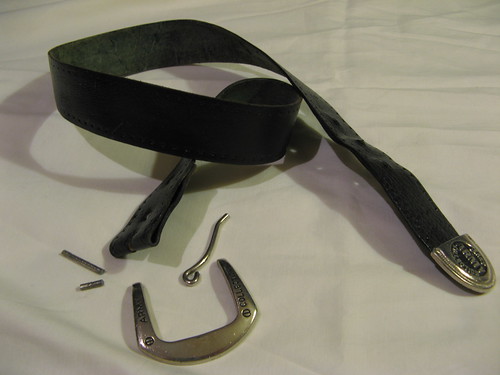 With the looming global economic problem, we all have to do our share to ease the sting that it might give. Individually, we have to take stock of where we are. As in my previous posts , I have called for a little belt tightening whenever there is an oil price increase or an economic downturn, as a way of precaution.
That call includes the national government. Unfortunately, that call will most likely go unheeded. As reported in the Inquirer, "the proposed 2009 budget is bigger by 15.3 percent, or P188.3 billion, than the current national allocation."
I have no beef with budget increases if I can see public funds well spent. But if the money will just go to double appropriations, or Oplan Bantay Laya, or Quedancor, or questionable use of "intelligence funds," then forget about it. Slash the budget, if nothing good's going to come out of it.
But if Budget Secretary Rolando Andaya had his way, he wouldn't want the budget to be slashed because such a move would mean "sacrificing economic growth." I'm not sure where secretary Andaya is coming from, but if cutting the budget means less money for Gloria to entice congressmen to strike down an impeachment complaint, or for unnecessary junkets for officials and their entourage, or for the nth basketball court in the undeveloped lands of congressman so-and-so - then let's slash the budget and sacrifice "economic growth" by all means!
Here's a news flash, my good sir: give up the money, because it's not yours. If you want it, be accountable for it. Grow up and take responsibility.
Photo: Bludgeoner86, Flickr, Creative Commons
Thursday, October 16, 2008
JPEPA People
 So that we may know who we will commend/condemn in case JPEPA brings us joy/suffering in the future, I'm listing the parties involved in JPEPA:
Treaty signatory- Gloria Macapagal Arroyo (2006)
Main proponents in the Senate: Miriam Defensor-Santiago and Mar Roxas
Main proponents in the Senate: Miriam Defensor-Santiago and Mar Roxas
Senators who ratified the treaty:
Manny Villar
Miriam Defensor-Santiago
Mar Roxas
Francis Pangilinan
Edgardo Angara
Rodolfo Biazon
Alan Peter Cayetano
Jinggoy Estrada
Juan Ponce-Enrile
RichardGordon
Gringo Honasan
Panfilo Lacson
Loren Legarda
Lito Lapid
Ramon "Bong" Revilla, Jr.
Juan Miguel Zubiri
Senators who voted against the ratification of the treaty:
Aquilino Pimentel, Jr.
Benigno Simeon "Noynoy" Aquino III
Francis Joseph Escudero
Jamby Madrigal
(Joker P. Arroyo Pia Cayetano were absent. Antonio F. Trillanes IV, facing mutiny charges, is barred from attending sessions)
Photo: futureshape, Flickr, Creative Commons
Wednesday, October 15, 2008
Buhay Pa Tayo
This post is my take on Blog Action Day 08 - Poverty

Why are Filipinos poor? That is the one billion peso question which has hounded us for the past decades.

More than a hundred years ago, Jose Rizal gave his piece about the Philippines' state with an article entitled The Indolence of the Filipino.
He wrote, "Before the arrival of the Europeans, Malayan Filipinos carried on an active trade, not only among themselves but also with all the neighboring countries," He added, "Wealth abounded in the islands." Filipinos were described by early historians as "well-featured, with good aptitudes for anything that they take up, keen and susceptible and of resolute will, very clean and neat in their persons and clothing, and of good mien and bearing."
However, Rizal explained that, "A fatal combination of circumstances... has led to the decline of labor. He cited a number of reasons why the Filipinos of his time had become indolent: wars and internal disorders, gambling, overdependence in religion, lack of capital, absence of means and even the hot climate.

But Rizal intimated that there were really two main causes, which are: defects in training (Very limited training at home, tyrannical and sterile education of the rare centers of learning, the blind subordination of the youth); and lack of national sentiment (The absence of all opposition to measures prejudicial to the people and the absence of any initiative in whatever may redound to its good).
More than a hundred years after our national hero's observations, the Philippines is still hounded by the very same problems that has kept us poor: substandard education and lack of national identity.
It's easy to blame the government for poverty in our country. And make no mistake about it, it shares a big part of the blame, since it is the one steering the ship. The government, it seems, is being run by people who look out only for themselves. Education has taken a back seat. Taxes are increased irrationally without the requisite improvement in tax administration. 'Reforms,' which in reality are dressed up dole-outs, are paraded to the people to give the illusion that things are being done. Such a dismal state of affairs just makes even the most patriotic say "to hell with the Philippines!"
But individuals are part of the blame too. We cannot really expect the government to do everything for us. The last time I checked, we are not a communist country. We have to do our part too. A little pride and accountability can go a long way in our fight against poverty. And it starts from the simple things: throwing the trash in the proper place, following traffic rules, paying the correct taxes, objecting when the government does something wrong, applauding when it does something good. We can do big things by doing the little ones right.
And while we are still a long way from eradicating poverty, and despite all the seemingly insurmountable obstacles, we are surviving.
A great many examples abound as to the resilience of the Pinoy to survive: The OFW who risks life and limb in a foreign land, away from loved ones, just to send money back home; The teacher, with her many sidelines just to get by; The sidewalk vendor who hawks his wares day in and day out, knowing that anytime the MMDA would swoop down and confiscate everything. The list goes on and on.
Indeed, we play the hand that providence dealt us. Good thing that the Filipino has the resilience of a sturdy tamaraw and the disposition of a singing maya. We're still hanging on despite all odds. Buhay pa tayo.
Photos: Kevin and Siomuzzz, Flickr, Creative Commons
Tuesday, October 14, 2008
Impeachment, Again and Again
 Push for impeachment, because there are impeachable offenses committed.
Push for impeachment, because the president was never elected.
Push for impeachment, because seven years of bad rule is enough.
Push for impeachment, because one year more of ugly rule will possibly become our downfall.
Push for impeachment, because not doing so means that we don't care anymore.
Push for impeachment, because the administration may be callous enough to think that we don't oppose how the government is run right now.
Push for impeachment, because the position of President is further bastardized under the present regime.
Push for impeachment, because there is this nagging feeling that she won't leave her seat unless forcibly removed.
Push for impeachment, because there is always hope that our congressmen will grow a conscience, and entertain the impeachment complaint.
Push for impeachment, because it is the right thing to do.
Photo: Editor B, Flickr, Creative Commons
Sunday, October 12, 2008
Spam Sunday: Monkey Waiter
Since it's a Sunday, I figure that today is the best time to post some light stuff. Things I will be posting every Sunday starting today will be useless/irrelevant information I might have received in the mail or encountered while surfing. For the inaugural Spam Sunday, let me present you with the monkey waiter from Japan.
No, it's not a slur. It's really a monkey... who waits tables...
No, it's not a slur. It's really a monkey... who waits tables...
Subscribe to:
Posts (Atom)

Custom Search